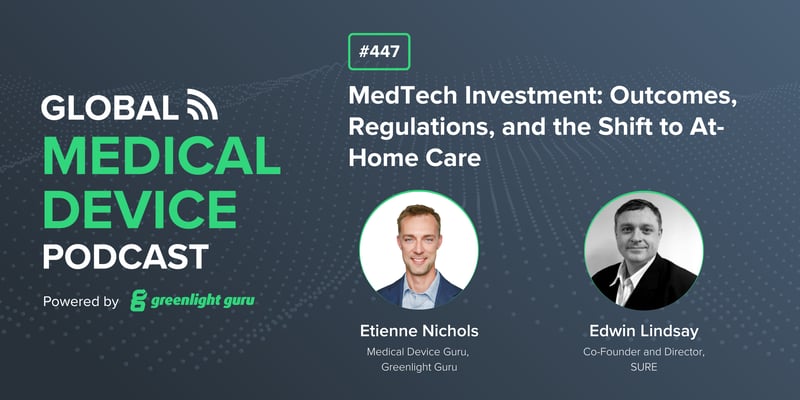
In this episode, Etienne Nichols sits down with Edwin Lindsay, a seasoned MedTech operator and QARA leader, to discuss the systemic challenges facing the pediatric medical device market. Following a personal experience in a neonatal ward, Edwin highlights the stark reality that many pediatric treatments rely on adult devices adapted off-label, often leading to safety risks and clinical inefficiencies.
The conversation delves into the "mismatch" of the pediatric market: these devices require the same rigorous regulatory and quality standards as adult products but offer significantly lower financial upside due to smaller patient populations. This creates a barrier for investors and manufacturers, leaving clinicians and nurses to "work miracles" with tools that aren't always fit for purpose.
Despite these hurdles, Edwin shares an optimistic vision for the future. He discusses his initiative to build a collaborative network of experts—including regulatory consultants, testing houses, and grant writers—willing to provide pro-bono or at-cost support for pediatric startups. The goal is to create a streamlined regulatory roadmap that prioritizes patient safety without the prohibitive costs that currently stall innovation.
Watch the Video:
Listen now:
Love this episode? Leave a review on iTunes!
Have suggestions or topics you’d like to hear about? Email us at podcast@greenlight.guru.
Key Timestamps
- 00:45 – The "Pediatric Gap": Why pediatric devices have adult-level requirements but lower ROI.
- 03:12 – Personal Insight: Edwin’s experience in the hospital and the "Guinness philosophy" of giving back.
- 05:30 – The danger of adhesives and adapting adult materials for newborn skin.
- 08:15 – Building a pediatric volunteer network: Testing houses and consultancies stepping up.
- 11:40 – Regulatory Roadmaps: Navigating the age variability from premature infants to adolescents.
- 14:50 – Off-label usage risks and the "mindset shift" required for manufacturers.
- 18:25 – Micro-timestamp: The FDA’s Humanitarian Device Exemption (HDE) and P-Sub programs.
- 21:10 – Real-world clinical friction: Alarm fatigue and sensor sensitivity in NICU settings.
- 25:40 – The hidden costs: Manufacturing complexity, multiple SKUs, and low-volume production.
Top takeaways from this episode
- Regulatory Flexibility: Utilize specific FDA pathways like the Humanitarian Device Exemption (HDE) and the Pediatric Submissions (P-Sub) program to gain early feedback and specialized guidance.
- Collaborative Cost-Sharing: Seek out "altruistic" partners; many testing houses and manufacturers are willing to work at-cost or under different financial models for pediatric-specific innovations.
- Design for Sensitivity: Pediatric innovation isn't just about miniaturizing adult tech—it requires solving unique issues like alarm fatigue and skin sensitivity (e.g., non-damaging adhesives).
- Workflow Integration: Engage the "head nurse" early in R&D to ensure the device fits into the high-stress environment of a pediatric ward without adding to clinical fatigue.
References:
- FDA HDE Program: A regulatory pathway for devices intended for diseases or conditions that affect small populations.
- Greenlight Guru: The industry-leading platform for QMS & EDC solutions, helping MedTech companies maintain compliance while accelerating pediatric product development.
- Etienne Nichols on LinkedIn: Connect with Etienne for more MedTech insights.
MedTech 101: Off-Label Use
In the medical device world, "Off-Label" means using a device for a purpose, or on a patient population (like infants), that the FDA has not officially cleared.
Think of it like this: Imagine you have a high-tech hiking boot designed for a grown man, but you have to put it on a toddler because no one makes toddler-sized hiking boots. You might be able to make it stay on with extra socks and tape, but it won't support the child’s foot correctly and might cause them to trip. In pediatrics, doctors often have to "tape the boot" because specialized devices simply don't exist.
Memorable quotes from this episode
"We need to give clinicians the correct tools to work their miracles. They don't want to use products off-label; they want devices actually designed for the children they are saving." - Edwin Lindsay
"If you have a pediatric project, there is a community behind you. We are breaking down the barriers of risk and cost because these babies deserve a chance." - Edwin Lindsay
Feedback Call-to-Action
We want to hear from you! Are you working on a pediatric breakthrough, or have you faced challenges in this niche market? Whether you have a topic suggestion or a question for Edwin, send us an email at podcast@greenlight.guru. We read every message and pride ourselves on providing personalized responses to our community.
Sponsors
This episode is brought to you by Greenlight Guru. Navigating the complex regulatory landscape of pediatric devices requires a robust foundation. Greenlight Guru’s QMS (Quality Management System) and EDC (Electronic Data Capture) solutions are specifically designed to help MedTech innovators manage risk and clinical data with precision. Whether you are a one-person startup or a global entity, Greenlight Guru helps you get safe, effective technology to patients faster.
Transcript
Etienne Nichols: Hey, everybody. Welcome back to the Global Medical Device Podcast. I wow; I flubbed this up again. It's good to see everybody who's out there with us today. Today we're going to be talking about some of the biggest issues in bringing a pediatric medical device to market and why it is difficult and maybe how to overcome that.
Pediatric devices, they tend to, they have adult level regulatory quality requirements but not necessarily the same upside that those adults level devices have. And so that can cause a lot of problems.
The market is smaller, so the payoff is smaller. The mismatch, you know, it can make people cautious. Companies, hospitals, investors, people don't put the same time, the same amount of investment or it's just, it's just a different market.
So, in this episode we want to talk about why that happens, how it slows progress and what we could do to make it easier to build and adopt better pediatric devices.
And so, the person I'm talking to today to help make this clear is Edwin Lindsay. Edwin Lindsay is a MedTech operator and quality regulatory leader who's helped take products from concept to clearance across the US and the EU.
He's a co-founder of Sure makers of a radiolucent single use spinal retractor. He also runs compliant solutions, and he advises companies from one person startups to multinationals on pragmatic risk based QARA. And he's gone across several roles, spinal implants, wearable patient monitoring, vascular devices.
He's built ISO 1345 FDA ready systems; he's led audits and submissions. And he focuses on one thing, getting great technology to patients fast without cutting corners, but doing it the right way.
And I actually you'll see him at shows if you're in the industry, you will see him all over the world and if you're on LinkedIn, you'll see him there. And that's actually one of the things that really brought him to mind is one of the things that he has posted recently was about his, was he grandson, your granddaughter? I don't remember exactly.
Edwin Lindsay: My grandson.
Etienne Nichols: Yeah. And the, and the, the thing that you had said after seeing him in the hospital and going through all these different things was made you realize that you would put an offer out there to the industry if you're working on a pediatric device as A startup or one person company, a spin out from a university or a hospital or an entrepreneur with an early stage idea and no RA clinical team yet.
He is interested in helping you navigate the market to get that pediatric device to market. And I'm not going to say for free, I'll let you say however that works or what you want to offer there but how are you doing today, Edwin?
Edwin Lindsay: I'm fine, thank you Etienne. Doing well. Yeah. As I say, as you said there warm sitting at 10 nights in the hospital, just sitting watching my grandson with all the various medical devices speaking to the nurses as well and the kind of the hardship they have, whether it's an adult device having to be adapted for the baby or whether it's just the device hasn't really fit for use at times even though it's been through regulatory, it kind of is too sensitive.
But yeah, sitting there. I've been in the industry over 20 years taking a number of different products to market but one of the things that hit home was that the innovative pediatric devices and people not wanting to go near them, the kind of the risks as you said.
But yeah, I'm looking to give back at times as well because I've spoken since that post on LinkedIn, I've spoken to a number of pediatricians companies or startups, early stage companies, even a couple of subgen that I, I've known, I've came to with ideas and I've given them some regulatory clinical advice and gave them kind of pointers but also working as an advisor with them now just to kind of give them a hint of how you go forward.
But it's just one of the things I've been in industry, made money from the industry, taking products to market. I want to give back and that's just my nature.
And as if you think from my other LinkedIn posts from known as the Guinness man, that's one of the things that resonates with me is because when Guinness established themselves, built the brand, they gave back to the locals, they gave back to people. If you know the history behind Guinness as well, they gave back to the community after they got established.
And that was probably one of the things that resonated with me is how can I give back to try and make it easier and make it worthwhile for just spending 10 days in the hospital looking at these, the wards, the different children and how they, how they need, they do need our help.
Etienne Nichols: Yeah, that I think that's awesome because I mean I have four kids myself, so I've seen those babies in the hospital. And I think about that the skin when a baby just is, is, is a brandnew baby and it's, it's new.
And having worked with adhesives in the past and done different testing, we never put them on a newborn. I just to think that that adhesive for an adult is going on a baby and going to have to come off at some point is a little bit scary.
And I really, I think that putting more investment and putting more of that R&D innovation into the pediatrics is really important. That's awesome.
Edwin Lindsay: Yeah. Yeah. And even with what you said there, the adhesives, you watch the nurses when they go to take off the adhesives have got some, they've got a fluid which helps to take the, to take to the kind of sensitizer and to the kind of, the adhesive of it to make it easier to come off.
So that gives you. Rings bells right away when you say, well why do we need a second thing to take it off exit. Because the feedback when you talk to nurses is either not sticky or too sticky.
And nine times out of ten it's too sticky for baby's skin which then damages that skin or if it's over a wound.
It's getting simple things that you need an additional aspect to young people to use it on a baby which is sometimes not right. I know the, I know I'm not stupid about the.
As you said, there's a cost, there's a risk and it's always.
It's not really viable for companies to do it because they don't make money on it, etc., but there has to be something to make, make it easier to get these products to market for children.
And I think it resonates home when you. Since the post, I've spoken with a number of people that I've known in the industry for years and it's the.
They've also had similar stories whether it was their own son or daughter or whether they knew somebody that we are from going into hospital at early age to some passing away, that they've kept it there and they've all come out behind me and supported us on this and they're saying they're starting to build up a network of people who are willing to help, which it just shows you what the medical device community could be like and it's something that yourself and being guru have done.
I've been at a lot of these events like MedTech World LSI, where you can see communities getting built and that's one of the Things that makes this community so good and the people who are out there willing to kind of join in and help when.
And I think it just needs that sometimes that spark, that need or that kind of idea. And how do, how do we get people to help?
Etienne Nichols: Yeah, that's awesome. So, I guess, you know, on the podcast we don't ask for much. Typically, I've type. I don't know that I've ever really asked anything from the audience. But if you're out there and you're a, you're a clinical person or if you're regulatory, if you're a test person or any of those things and you want to help out with a pediatric especially community, reach out to Edwin or myself and I'll put, put you in touch with Edwin.
Maybe we can expand that network that you're building. Edwin.
Edwin Lindsay: Yeah, no, I say I've had a number of different people come to us, even test houses have said, let me know what if you need support, let me know. We can look at our kind of a different cost model if we know it's a pediatric device, which is, it's something really good to find out that people are willing to do that.
I think, as I say, people get day to day jobs and they get on with it. They're there to keep their companies going. But I think when it resonates home and you see when people are volunteering, that kind of made it worthwhile, that post. It made it feel more kind of proud that I put that post out because it's actually got people talking.
It's not just talking about me and my Guinness and my Guinness post. It's actually talking about what can we do to help and giveback. And I think the community, the MedTech community, community across the world can be really good at times.
And that's where I can see that now.
Etienne Nichols: Yeah, that's great. Well, let's talk a little bit about some of the difficulties that we face when we're developing a pediatric device. And one of the things that I would think of, we've already given some examples, but do you have any other additional examples as to what makes pediatric devices from a regulatory standpoint different from adult devices, whether in practice around different age groups, things like that.
Edwin Lindsay: I think it's definitely the last thing you said there, that the age groups, because you're not just developing it for an adult and then that can be, it can be very simple to make it for an adult.
Wearable devices, Elastoplast, ECG probes, etc.
It's the age group where you've got zero to one, you've got premature babies all the way through to newborn, which is where it's been the full term right into 1, 2, 3-year-olds.
All varies. And I think that's the thing where. How do you define and how do you test and develop the device that's going to cover all this, all the ranges?
Because you don't know when something's going to go wrong with a baby or a child.
And it's that kind of the variation, I would say it's easier to determine it for an adult, but when it comes to a child and as you say from zero all the way up to 16, 18, 20, and you've got the variability and you've got the sizes, et cetera, you've got that.
How do we manage the regulatory challenge here for that? And the testing will get clinical trials.
How is trying to look at some sort of, and as I say, it's made me start thinking is how do we create a kind of pediatric type regulatory roadmap kind of plan that will help companies that we can go and speak to regulators about and say how do we kind of show that it's still safe?
Because that's probably the key thing. Safe and work.
Because at the moment, when you talk to clinicians, surgeons, they're having to adapt adult devices, they're having to potentially use adult devices or use it off-label or it's not really for purpose for a baby, etc.
So, it's looking at that. How do we get a roadmap that we can go speak to regulators about to make it safe? And it's coming up with these ideas of how we've got the various ranges, clinical studies affecting this.
The FDA have got a very good one with the HDE program where it's around safety. You can then follow up with a number of cases, 8,000 cases a year, et cetera. But it's looking at that not just in the U.S. but across the world, because everybody you need products in the marketplace, we're looking at, I think one of the biggest ones is risk and the risk of what happens if we get it wrong.
That's the same risk as we have for adults. I know it's slightly different because the difference between an adult and a child, but we still have to look at it.
We're still trying to save people's lives.
Until we're in that situation, it’s kind of doesn't hit home to a lot of people.
And that's what we probably need to change the mindset. But also look at is how do we make it not easier but more straightforward that we can, we can look at it.
What were regulators. We speak to regulators and say, how do we make a plan of getting new innovative medical devices for pediatrics come to market?
We all talk about AI; we all talk about innovative devices. But is how do we make it to get it to market in a cost-effective way? Because obviously, as you're looking at the smaller community, the price, the value of the cost does go up and the cost of testing the numbers, it's maybe not the same as looking at methods that makes people comfortable that they can place the device on the marketplace.
But we're giving the children a chance and we're not putting nurses and clinicians under the same pressure as they would be is like, oh, we're having to do off-label.
We're having to create something because it's a child. We shouldn't put the children under the same that, that kind of pressure as well. Because if something goes wrong, it's, it could have been stopped because we've thought about it, we've taken the device, we've developed a pediatric device rather than using an adult device.
Etienne Nichols: There’re several things that I, that you made me think when you were talking about all of those different things because I agree we need new ways to accomplish this. And someone might say, oh, you know, just follow the current path.
You know, you don't need something new. There's, there's no reason for this new. But here's, here's why I agree with you and kind of emphasize this again, because a lot of times we're focusing on innovation.
We want something brand new as innovators.
But what you're talking about, a lot of what you're talking about that these babies and very small children are experiencing or the devices they're interacting with are clear devices that are for adults.
But maybe that company didn't feel the need or didn't seethe reason to pursue a pediatric indication.
So, there's a lot of these things that are being used off-label. Is that safe to say? And if that is the case, they've already, they're already established for a reason. So, there's, there's a couple problems or difficulties that we, we face in trying to get those devices cleared for a child. And one of those things is how are you going to have a clinical trial or show the clinical evidence, parents, myself included, I would be so reticent. I would not want my child to be in a clinical you know, evaluation. So how do we get past that, you know, from a regulatory standpoint and to show the regulators listen it's happening or maybe even show the parents before they go into that clinical trial the babies are going to experience this anyway.
It's going to be used on them, just going to be used off-label. We want to show a better way to do that and a safer way to do that versus what's already being happened.
I don't know what are your thoughts on how to accomplish or overcome those?
Edwin Lindsay: It is hard and it's always been there and I say that it's probably looking at the mindset and how do we actually. Because people are going to be worried about. Because it's never been using that child, that baby and the risk of something going wrong when it's, when the babies in ICU or PQ then there is, there's major risks there already and if they're using off-label then there's still a risk. And I don't know whether that's a perception of well that's, that puts the pressure on the clinician, the surgeon rather than the company because a lot of the companies go well that wasn't intended for children so not my fault.
And that's a mindset as well. And it's kind of yeah, that's business. But we've got, it's getting, speaking to the regulators, getting early discussions with them and as I say through the P sub program, I'm working with a couple of pediatric device companies giving them advice. We are working with the FDA and getting advice on what the clinical trial should be how many patients we need.
But no but them knowing and one thing I do think is if they are very good when it's coming to this is they are willing to work with you with pediatric devices.
They know they can see the same risks as that and see what's going on.
So, it's trying to get that fine balance because you're not going to get a multi patient clinical trial of.
Because there's maybe going to be one or two babies or there's going to be one or two children and it's going to be very complicated. But it's.
I think we still have to follow the same testing program and agree people will say oh, but follow the same route. Yeah, that's okay. But sometimes that same route doesn't work because it's on smaller devices, it's on less number of devices for sales and people.
When we look at statistical analysis, et cetera, we have to find Ways of finding innovation and making it work and it will come together. I think bringing this through the podcast, through LinkedIn, through whatever I'm starting to do with the kind of that post is getting conversations going.
And it's not from a negative point of view where people are saying, yeah, well that's just life and that's risk.
People are actually coming saying, right, how do we actually achieve this? Now it's maybe been sitting in the back of the minds or the companies that have developed the handoff devices have said, okay, it is too risky, it's too costly.
But when you start saying, well, how do we come up with an idea?
Let's not just go, okay, it's the risk, the cost, etc. And just follow the same path and we'll get there. Well, if that was that it'd be that easy. Why do people not do it? And it comes down to risk perception, the fear of the parents, the grandparents, of something going wrong. But there is always that risk. And I think that comes down to education and educating them.
I think there's always a fear there. If something goes wrong, that will feel bad. But if you look at subjects, they're operating on babies every day, they've got the confidence. They don't want to see babies die; they don't want have a. They want to be able to walk out that room and talk to the patients and parents and say, he's going to be here, she's going to be okay and this is what's happening. They don't want to be, they want the correct tools to be able to do this and to do that because these people want miracles and we need to be able to give them back the kind of tools to help them work their miracles.
And again, I think it's going to come down to discussions, going to be coming down to how do people kind of communicate and how do we make this easier. I don't have a magic wand at the moment, but as I start to talk to more people, we're coming up with ideas.
There's some sort of pediatric plan or some kind of roadmap for pediatric devices where we can talk to regulators and get their buy in and find out is this the best way forward?
Do you have any comments on it? Where do you see things going wrong? But again, not compromising on quality and the performance of the device.
We have to ensure even more than probably adult ones, we have to ensure that we give these children, these babies a chance to survive.
And if we're using adults or there's nothing there or that'skind of hard for them, then that's the. That that's probably worse than doing.
Etienne Nichols: Yeah.
You know what.
What that made me think so my mechanical engineering or product development backgrounds, I guess kind of tickling my brain a little bit. And I'm thinking, you know, when I've worked with innovative companies in the past, they might come up with a very great innovation, but they're probably solving a problem that nobody really asked them to solve.
And I know this feels a little bit off topic, but I'll try to bring it back around. Let's take.
Well, one of the things that I think you might have described was the like a leads for an echo on a baby. If you're using the same leads that you would use for an adult, that's going to be a little bit difficult.
And I could be wrong. Maybe there are baby echoes out there that covers.
Edwin Lindsay: Yeah, there is. But some hospitals don't because of maybe callist or as the same way we are. The, the people who are complacent on the baby without an issue and get what they need.
Some. Then they need to cut to size, which they shouldn't be doing. And it's just that kind of. But there is baby one’s out there. But it's. Then it comes down to cost.
It could come down to the hospital, the purchasing department.
We have to make something applicable because there is device out there. But again, sometimes I'm coming down to cost. And we know in this country life, we've got insurance companies, we've got buyers, we've got purchasers.
And it is down to the financial side of it, but it's how we manage that from a kind of an obligation point of view from the industry.
Etienne Nichols: So, what I'm thinking is so you've got this adult version that they've just miniaturized now for a baby. And it seems like that makes sense because if you're just. Let's just look at the adult version world.
Nobody. Well, I could be wrong about this. Maybe somebody out there is interested in an innovation around the leads on echo. But the hospital's got to figure it out. They're going to put the intercostal lead here and this, that and the other and to put them on the wrist and they.
They've got to figure it out. Maybe someone's going to come along with a vest that you easily pull over. But. But it's. They're probably going to think why am I going to change my workflow for that?
So, you. You're smiling Because I think someone gets up on the investor stage, says we are going to disrupt the market and revolutionize, you know, the bingo words that you hear at these pitches by doing this additional thing.
And everybody looks and says no doctors or no nurse is really going to put up with that. It's the head nurse that you really got to get past in that situation.
But that's a. I think that's true. And that's the advice we would give a medical device company. I mean if you differ, I'd love to hear it to that medical device company for adult products.
But it could it be that maybe the innovation could happen with the pediatric. Instead of miniaturizing an adult device.
You take that innovative mindset and think, okay, well how can you actually make this better? A baby can't lay there and move and do all this stuff. Maybe putting a vest on a baby does make sense or whatever.
You know, I'm just using that as example.
Edwin Lindsay: Yeah, yeah. And I agree. And I sat there, as I say more for nine, ten nights watching them, watching my grandson just lie there asleep. And they've got various patient monitoring devices on them.
And when the baby's lying there, perfect.
It runs as long as there's, there's nothing wrong with the baby.
The STO2, the blood pressure, the, the pulse rate is all running perfectly. The baby twitches and it. Pulse rate goes tacky in seconds. And I feel for the nurses because I went out most mornings after when my daughter came up, back up after the, the night shift and my ears were ringing with the alarms going off.
And if there's 10, 15 babies in that are children in that ward and all these alarms are going off and it's. Is it to do with being too sensitive, not being fully developed for pediatric child on use?
It's that when you see the, you hear the alarm going off. And I think one example was when we were sitting there, I was holding my grandson and the S202 dropped to 60.
Then the blood, his pulse rate went to 200 in seconds, and it went tacky. Alarms are going off all over the place.
It settled back down again in 10 seconds. It was just because he started to move, I picked him up, etc. And that same time the nurse is running in to make sure he's okay.
And I'm like, well, it's a simple thing. Well, he's not blueyet, so 80, 60, but he's not really blue.
The patient monitoring device isn't.
It wasn't sensitive. It's picked up that it's dropped too much. But it wasn't actually the baby was wrong. It was probably the device that was too sensitive or I've not been into it.
It's looking at that. The pulse rate went over 200. And I'm saying, well, if he's pulses, if his heart rate is that 200, sees it's not coming out his chest because it would be.
Be scary if it was. And they were looking at me going, okay, how do you know that? And I sat down with the nurses and explained that. Why where I come from and why I say I'm fully sitting here looking at the David.
But also, do we improve this and why is this going off or what happened there?
And it's even the same. It's looking at the. When you come in to do the robs every four hours and they've got the cuff putting on the. They do the cuff on one leg, and the readings are very poor.
They move it to the right leg and it's perfect. And you're going, right, that's probably the baby. But also, could it be in a device? Because all they're doing and moving it is from the left leg to the right leg and they'll get the results, they'll get the readings they need. But why is it so different?
And as I say that. Or one of the legs isn't given a good reading, but there was nothing wrong with the leg. And is it the device? Is it the way it reads?
I don't know. It's that kind of unknown aspects of it. And it's just. It could be simple things. And I say, I think one of the downsides is it can be costly.
And I think that people are in this to make money in business. That's where they're in business for. But we’re probably. That probably resonated with me going back. Yeah, but we also have to treat these children because they're kind of so innocent that we can't really include it.
But we also to make business. But you. When you talk to the clinicians, and I've spoken with a few since then, and surgeons, and not just here, not just in the UK, but in the US and further afield, they're all trying to come up with devices. They're all looking at developing or trying to improve it. They've all got ideas.
And as I say, it's kind of. You're sitting there talking to them saying, this is what I think and this is how we kind of address it. It starts to make you feel good because they're actually grateful for the advice. They don't want to run away and do a lot of advice, cost a lot of money, put life savings into that. Even that one hour question, one hour the questions might be oh well that's not going to work then from a regulatory point of view and then or from as you said a clinical flow point of view even though they're in the clinical environment with that work and then they're asking what do we need to actually do.
So, I'll wait. I've then sent them a kind of a one page, two-page kind of overview and say this is what we think it could do. This is what the potential costs are, but we are running potential to put together a fairly decent roadmap to put it together and then let's go speak to the FDA because of the pre sub program and see what they've got to say what they think is there any and I say there's I think last time we spoke a new program for pediatric devices and there is a pediatric program in the FDA where you can go and talk etc. and talk to the FDA and there's companies out there that need help and that isa kind of a need for this because one Post creates over 150 emails comments private comments on LinkedIn and show any other emails that are there is a need for this is how we get this done and how we look at solving this issue. And I know people say yeah, we follow the same rules as we said earlier, it's cost but we have to look at it.
If there's that many people know that there's issues, there we need to look at it and say how do we address this?
Etienne Nichols: You know there are some family offices I venture to say that they are there's a certain amount that are out there who are willing to be somewhat altruistic and not necessarily focused as much on the return Anyway that's a maybe different topic but I think if, if someone out there knows those people.
Edwin Lindsay: Yeah, yeah that's the type of thing that I'm trying to reach out to just say I'm, I, I've got, I've got a lot of contacts across the industry through all these various events I attend to speak to and I'm starting to speak to them and as I say we've looked at there's a couple of the people who have early stage talk to them about testing houses and testing of devices and they've actually come up with good ideas that they'll maybe do it for cost.
So, if I come to them with a project and a pediatric device and they're willing to look at it. They're not just saying no, we're not going to make money.
They're willing to look at it because obviously they've got salaries to pay for, they've got equipment to pay for, etc. But they're not willing. They're looking at it from a kind of a, as they say, break even cost and materials type thing.
So, it’s still early stages, but there's companies that I've already spoken to offline who are looking to say let's help. I've heard a number of people from other consultancies, quality regulatory consultancies, people who are in the industry, who are not in the consultancy side but in the kind of manufacturing, who have got years of experience in pediatrics, have come to me privately and says I'll be more than happy to help, let me know where we can. And it's.
And it's not as is. And where I built my consultancy is a one stop shop where we provide a lot, we work with a lot of startups where we do the kind of.
We've brought in over the years, technical aspects, so bag compatibility, sterilization, AI electrical, we've brought in people to help startups. So, they didn't have a one stop shop that helps them get to market.
That's the type of thing that people are looking at with regards to the pediatric thing, can we get people who join in and help us with it? And I could call on people if you've got a pediatric project that's come out of a hospital, a nurse is developing a device where they do need help and support.
Where can you work?
I spoke with one this week exactly that all they need is a wee bit of help, some guidance on what they're doing and then some kind of. Just to be there from the odd question at the moment as they're taking it forward, somebody who may be able to create a prototype for them to look at because there is grant funding available there. So, I've already spoke to one company who says we can potentially help them with the grant funding.
Right, the grant writing.
So that's the type of thing that is kind of bringing this community together to try and make it easier.
It's never going to be easy completely because of the regulations and falling back on patient safety and making sure it works and it becomes a higher risk because as soon as you mention the word pediatric children, whatever, the kind of people's fear factor goes up and goes oh.
But if we can break the barriers down and get people to actually start working on that and working together, we could potentially make it a lot better for these babies and these children.
Etienne Nichols: Yeah.
Well, we talked a little bit about costs. Can you talk to, talk to us about where pediatric programs actually spend money? What costs might surprise teams the most and I don't know, like tooling for multiple sizes. There's additional SKUs.
Edwin Lindsay: That's exactly it. The manufacturing costs, because it's not like one stop, one size fits all for maybe an adult or it can be easily adjusted. It's like you're talking depending on what you're aiming at and whether it's a kind of premature baby, whether it's kind of a one-year-old or it's born.
But it's healthy, but it's not healthy. It wasn't premature, but something went wrong after the birthday, right through to 1, 2, 3, 4-year-olds. Every child grows at a different way, etc. So, it's that variability in the cost of manufacturing and the actual numbers of that manufacturing costs.
Because you're not going to be manufacturing a lot of products. You're going to be manufacturing maybe hundreds instead of thousands. And it's that of how many do we run, how many do we manufacture, the cost of it.
So, it's looking, that's also a major impact on it. But we need to look at it and see how do we, how can we actually improve on this, how do we get these products to market?
Because as I say, one of the things that will crop up is when it does happen to you. I've known of it and it's, it's never really resonated until then.
And I think that's what happens.
Things happen for a reason, and we have to look at it and we look at, there's people out there who can manufacture the technology coming forward. There's 3D printing. There’re numbers of different ways that we can look at manufacturing to make this better but also make it safer and actually be able to provide these devices with for these babies and these children.
And I think it's that looking at you say, how do we not use multiple molds? Because that just puts a value on it and the cost, but also only running maybe a thousand instead of ten thousand.
It's looking at that and look, okay, that as.
Yeah, I could probably hear some financial people and some of the manufacturers, you know, that's going to cost us money, and it will do, or it could do, but we need to be more looking at how do we actually bring the cost?
Can we bring the cost down but also be able to provide the device for that age group? Because we all one day could be in that situation. As I say, it could be mother, daughter, mother, mother, father or grandparents or great grandparents. Is that. But when you look at it and go how.
Until it resonates with you or it happens to you. Right. How do we actually improve it? And there must be ways. If we can improve the way we.
The innovation, we can look at the different ways of working, we can look at other aspects. And again, it comes down to we have to look at and start the discussions, the communications. I've started it through the LinkedIn post and following up, talking to various people and we're starting to kind of put together some ideas of how do we manage that.
It's still very early, but it's still really bringing out there.
I've known a few companies in the last, over the years, these events that have looked at pediatric devices and they've kind of disappeared because of the. Of these exact complications.
And it's been a shame.
A lot of universities across the world have got very good IP on pediatric devices, but it never really goes anywhere. It's sitting on shelves in the university. The IP may be done a proof of concept as one of the development projects or a project with a university or a hospital.
And then they've came, they've had a brick wall, they can't get funding, they can't get. No, it's not going to be economical to manufacture it. But what it was going to do is kind of help that child survive better.
And that's about where we need to look at how do we get this out. And I've worked with universities all over the world and I know from what's in that shelves that has been developed by very intelligent professors, doctors, kind of students that's sitting on the shelves and doing nothing. But it could actually save people's lives, save trauma on babies, trauma on children, because the devices have been developed, but they're not.
It's getting it to that next stage and it's. So, it's probably a very, A number of different things is what we need to look at. This is not a magic wand, and we solve it right away.
But I think we have to start thinking about it and looking at the, the process and how we get there. Talk to regulators, talking to people within the industry and trying to get ideas of how do we make this better.
Etienne Nichols: Yeah, yeah, that's really exciting to think that you're potentially going to impact the industry in this way. You've already made such a big impact, and I know that's not your goal necessarily but just.
Just to be able to give back is cool. Do, do you know of any summits or in just conferences that are focused on pediatric medical devices?
Edwin Lindsay: We know through one of the companies I do work with in the Midwest. There's the Midwest Pediatric Consortium that started last year.
We introduced one Scottish company to that. They went andattended to it.
So, there's one of them. There's a number that are coming forward next week.
I've been invited along to call meeting for a couple hours with the NHS Trust from the NHS but it's about people bringing devices to market for pediatrics within the NHS.
I'm going along to that so I'm starting to find out more. There's a number across the world that I'm starting to hear about more about people have introduced me to them.
So, the one I knew was the Midwest and the new people who were. Who worked on that and that was okay. It was pediatric companies could go along and tech and for investment let people know about it.
So, as I say, one of the pediatric device companies we were working with went along there. We've been supporting them through the FD program even before this happened.
We were supporting them because a lot of consultancies didn't really understand the pediatric world or it wasn't really looking at. So, we would actually we were working with them, giving them the support and it came, as I say, based on what I burn as a kind of consultancy, and we are not.
I looked at it a few years ago and says we need to be able to give startups a way of how do we support them better but without bankrupting them, without giving them too much.
So, we looked at. We brought in specialists around the areas of all sorts of devices. I said stabilization by compatibility, AI software and we gave them fixed costs, one stop shop aspect.
So, it worked with the startups. They knew how much the cash burn was, they knew how much it was going to come out unless they changed tactic. And that was the same whether it was pediatric or whether it was full kind of adult device.
I've always looked at that and how do we get products to market. That's probably the biggest feeling you get is looking at a product it gets to market, then it's first used on patients and the feedback you get, the feeling you get that you've saved, you've been involved there, that you've helped save their life or You've helped somebody improve their whole wealth or their living, that improvement, it gives you a kind of a buzz that gives you. It's adrenaline junkie that you go, that's the thing that spurs you on to try and help these companies and say, I've done this for 20 years where I've worked with startups, we've tried to get, how do we get the startup to the market without bankrupting.
We need this technology to market. Yes, there's risks from a consultancy point of view, but that's part of business. It's the thrill of that. And it resonates back to the team I've built at cs. It's a team of people who are committed, who want to take this to market, who want to help startups who take pride in what they're doing. And this is what I can see is potentially starting to happen with that one post in like time where people are coming to us who would love to help.
We want to give back to.
We've given the industry 20 years’ experience, but we'd love to give this back and help companies within reason, but we've got that. We want to be able to give back.
And if you can build that team and that trust, I think that helps to take things forward greatly. Whether you've got all the money in the world, the best sales team, if you've got a trust of the team behind you and people can trust you and you know you're working together and there's one goal that's half the battle for especially the startups, early stage companies and as say more probably pediatric devices. You need people who've got each other's backs, who know the risks but are willing to take the risks, who are willing to make the hard decisions.
And I've always said in the industry that startups need people who make decisions not giving you options. You need to as people that we keep on giving these pediatric companies to be able to help them make the decision, not just give them an option.
And because if you give people options and they look at you as an expert or somebody they know and you're only giving them an option, the fear factor steps in and they go, well, if they really don't know what they're doing, then what chance have we got?
And it's given that back in that role. I've done that from the day one.
I've always been in the people who are behind me and the consultancy team I've got, but people who I've worked with, they're all willing to put their head above the pulpit and make a decision, whether it's right or wrong. But they learn from the mistakes if they have to. Okay, pediatric could be a bigger mistake. But we know from the experience we've got, we know what they want to do, but what the decisions we have to make. Because the biggest risk is if we don't give them a decision or we give them options and nobody makes a decision.
It's just as bad as making a decision.
Making a decision is just as bad as not making the decision.
So, it's that kind of mentality that I can see is coming through now and it's building that kind of network where we can, if pediatric company needs some help, that initial one day support, just somebody to talk, talk to without being challenged, consultancy fees, etc., just to be able to sit on a zoom call, meet them at an event and say can you give us five, ten minutes? You think it's that just to get them going and let them make the decisions themselves from there, but you're actually behind them and tell them what, what kind of how to make a decision rather than as I say, just give them options because options isn't good enough for them. They need answers.
Etienne Nichols: Yep.
Well, this has been great. I know we're close to time, but if you had a call to action or if you wanted to ask the audience to do something, what would it be in this, in this context I.
Edwin Lindsay: Think to think after developing a device, if they think it could be used in children, but there's a roadblock because of cost risk as they think of can, what can we do to make it, to bring it. And it's a pediatric device. Can we go and talk to the regulators? What can we do from a manufacturing point, have an extra think because people want to get innovation to market quickly, they want to make revenue. There’re pressures from investors, there's pressures from grant people, but still have that thought of could this be using a child, a pediatric.
Could we make a pediatric device out of it? And if they don't, at least as I think about it, just have that thought or if they do need advice, they can reach out.
The network that we're building now around the pediatric is growing to the point where I'm even actually now considering making a LinkedIn page just for pediatric support. And it can become a communications tool that people can ask questions that can reach out to see if anybody's getting any advice on it, where it can build a kind of an avenue for that. So that's one area I have thought about just from conversations from a few nurses that I've spoken to recently where they've been kind of lost and they don't really understand.
They kind of been asking people, but they've not really got the answers they need. And they're kind of waving themselves through the darkness and going. But when you talk to them, they give you the ideas and then they start to get.
They can see a bit clearer. So, the ambulance.
Go back to one thing. Can you do pediatric two, if you can, is it. Can you take it forward? Can you. Can you be bold and risk and take this forward? And as I say, there's people out there that are willing to help people willing to kind of help take this to market.
One of my goals is you go and speak to regulators now and see whether. How do we make it not easier, how to make it more. A lot more straightforward for pediatric devices to get to market.
Etienne Nichols: Yeah, I think that's a good point. Not easier, but more straightforward. That would be helpful in and of itself. So, yeah, cool. I, I think, you know, I think that's a great call to action to have people.
If you're developing a medical device which, assuming you're listening to this podcast, you probably are at least working at a company that is, or you should be, or maybe you want to be, and just give that your.
Give that another think. Can you bring this to the pediatricworld as well? That's a really good thought.
Okay. Thank you so much. I really appreciate you sharing your wisdom, your experience. Edwin can't wait to see you next week and then in a few months in LSI. And I don't know if you post where you're going around the world.
I just feel like I know I'm going to bump into you, but if people are interested, reach out to Edwin. If you want to talk to him in person, like you said, get that five minutes, talk with him or reach out to him directly.
Yeah, this is great. Thanks so much. I appreciate it.
Thank you.
Edwin Lindsay: Thank you for the. Thank you foryour time. Put that out for us.
Etienne Nichols: Absolutely. Thank you all forlistening and we will see you all next time. Everybody. Take care.
Thanks for tuning in to the Global Medical Device Podcast. If you found value in today's conversation, please take a moment to rate, review and subscribe on your favorite podcast platform.
If you've got thoughts or questions, we'd love to hear from you. Email us at podcast@greenlight.guru. Stay connected for more insights into the future of MedTech innovation. And if you're ready to take your product development to the next level.
Visit us at www.greenlight.guru. Until next time, keep innovating and improving the quality of life.
About the Global Medical Device Podcast:
.png)
The Global Medical Device Podcast powered by Greenlight Guru is where today's brightest minds in the medical device industry go to get their most useful and actionable insider knowledge, direct from some of the world's leading medical device experts and companies.